
This post contains affiliate links. If you book through them, I may earn a small commission at no extra cost to you.
Jeonju is the easiest overnight trip I’ve taken from Seoul so far. You leave on a Friday afternoon train, sleep in a traditional hanok, eat far too much, and you’re home by Saturday evening. If you’re visiting Korea and can’t fit Busan in, this is the trip I’d do instead.
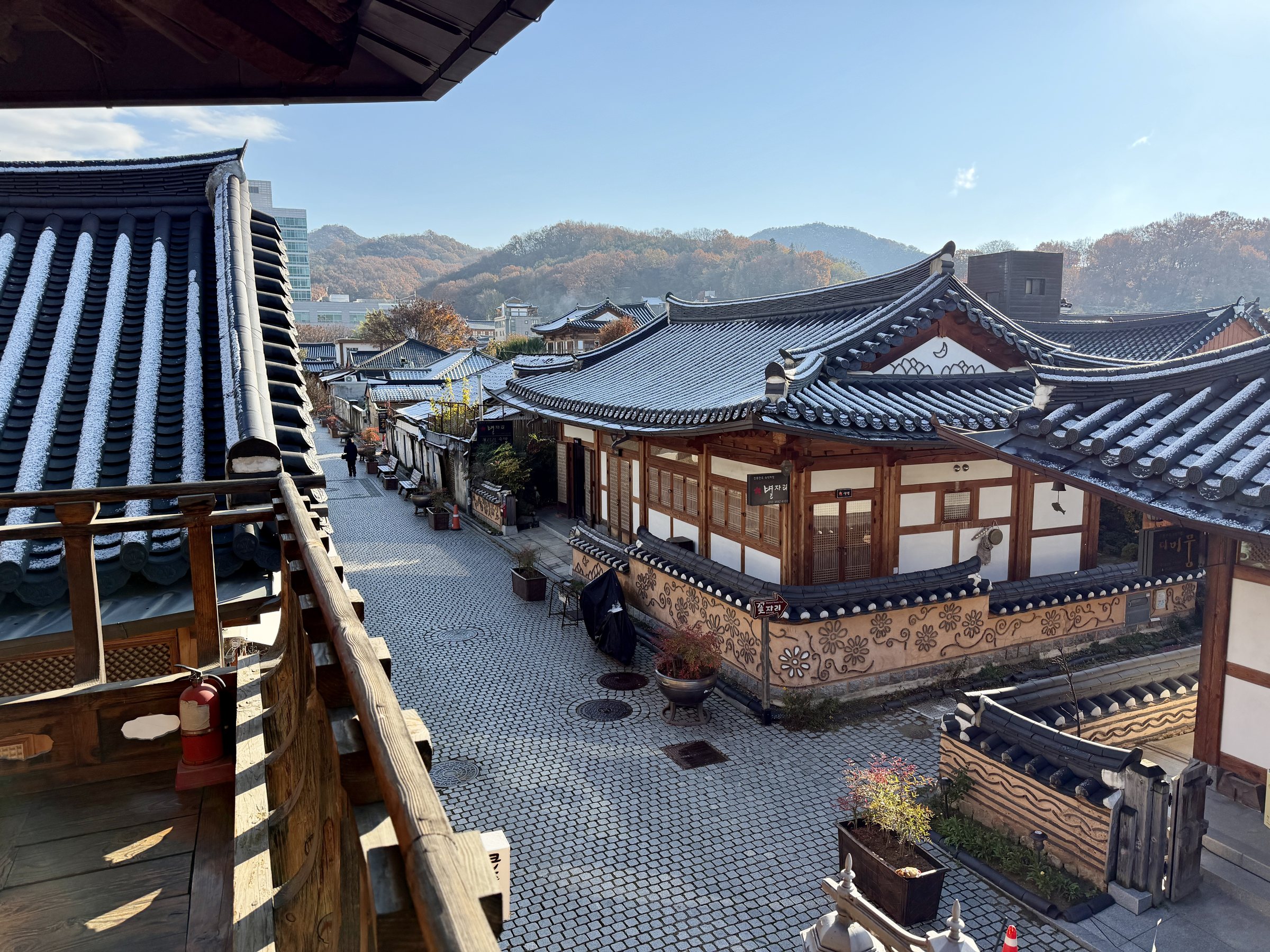
I went in late November with three friends, mostly for the food. Jeonju is where bibimbap comes from, and the whole city seems to be organised around feeding you. What I didn’t expect was how pretty the Hanok Village would be this late in the year, with the ginkgo trees still bright yellow and the tiled roofs dusted white in the morning.
This is everything we did in 24 hours, what it cost, and what I’d skip next time.

How to get from Seoul to Jeonju
We took the KTX from Yongsan Station straight to Jeonju Station. Tickets were 30,600 won each way per person, and there’s no transfer, so you can settle in with a coffee and be done with it.
The ride takes roughly an hour and a half to two hours depending on which train you catch. Book ahead for Friday afternoons and Saturday evenings, since those are the trains everyone else wants too.
Jeonju Station is not in the Hanok Village. It’s a few kilometres north, so plan on a short ride at the other end. We took an Uber, which came to 8,500 won one way.
One detail I liked: Jeonju Station itself is built with a hanok-style roof, so the theme starts the moment you step off the train.
Where we stayed: 한지꿀잠 (Hanji Kkuljam)
We stayed at 한지꿀잠 (Hanji Kkuljam), a hanok guesthouse inside the Hanok Village, for about $95 a night. If you’ve never slept in a hanok, this is the reason to stay over instead of doing Jeonju as a day trip.

The best part wasn’t the room. It was the shared balcony upstairs, an open wooden deck with low tables that looks straight out over the village rooftops to the hills behind. I went up first thing on Saturday, when the tiles were still dusted white and nobody else was around.
Staying inside the village also means everything in this post is walkable. We didn’t use a taxi again until it was time to go home.
We booked through Booking.com, and check-in is self-service, so there’s no front desk to coordinate with. Some rooms are ondol style, with bedding laid out on the traditional heated floor, but we chose one with a bed. There’s luggage storage too, and the location is hard to beat: you’re a short walk from everything.
Friday evening: the village at dusk and three rounds of food
We arrived late in the afternoon, dropped our bags, and walked. The Hanok Village is at its best in that last hour of light, when the wooden buildings glow and the shop lanterns come on. It’s touristy, yes. It’s also lovely, and by early evening the day-trippers have mostly gone.


Tteokgalbi at 교동떡갈비 (Gyodong Tteokgalbi)
This was the surprise favourite of the whole trip. Tteokgalbi is minced short rib shaped into thick patties, marinated, and grilled, and here it arrives sizzling on a cast-iron plate over a bed of onions. It’s sweet, smoky, and soft enough to cut with chopsticks.

It costs 28,000 won for two people, and the restaurant asks for one portion per person. Rice is ordered separately. On weekdays there’s a lunch set with tteokgalbi and a small bowl of cold noodles for 16,000 won, which we missed by arriving on a Friday evening.
A beer at Nomadic Brewery
Next we went for a drink at Nomadic Brewery, a craft beer bar in a wood-beamed space that fits right into the neighbourhood. After a few months of Cass and Terra, a properly brewed beer felt like a treat.

I tried two. Sugar Magnolia is a 4.5% fruit ale blended with omija syrup, the Korean berry said to carry five flavours at once. Hanok Stay is a 4.7% rice session ale brewed with organic Korean rice: bready and malty, with a silky rice mouthfeel and soft, juicy hops. Sugar Magnolia was my favourite, so start there.
Hanjeongsik: a cool experience, but a tad too adventurous for us
Hanjeongsik is the traditional Korean full-course meal, and Jeonju is one of the places known for it. We went to Yongjinjip, a makgeolli house in the old town. The table disappears under dishes: soups, grilled fish, pancakes, pickles, raw things, fermented things, and a kettle of makgeolli in the middle. We ordered the set for three to four people, which was 85,000 won.

I’m glad we did it once. It’s a spectacle, and it’s a very different way of eating from anything in Seoul’s expat bubble. But I’ll be honest: a lot of it was more adventurous than we were ready for, and we left plenty behind. If your group eats everything, go for it. If you have picky eaters, the tteokgalbi and bibimbap are the safer bets.
Saturday: rooftops, ginkgo trees and the bibimbap we came for
Morning on the balcony
Get up before the tour buses. From the hanok’s shared balcony the village is all curved grey rooftops, quiet lanes, and hills in autumn colour behind. This was my favourite half hour of the trip, and it cost nothing.
We followed it with brunch at Flat Mate, an Australian-style café nearby, for anyone who needs good coffee before another day of Korean food. We had the avocado toast (14,000 won), the ham and cheese toast (11,000 won) and a Flat Mate latte (6,500 won).

Gyeonggijeon Shrine and the ginkgo trees
Gyeonggijeon sits at the entrance to the Hanok Village and is the main historical sight in town. It was built in 1410 to house the portrait of King Taejo, who founded the Joseon dynasty, and you can see the portrait in its hall, bright blue robe and all.


The history is interesting. The grounds are the real draw in late November. The ginkgo trees were at full gold, the ground under them was a yellow carpet, and half the visitors were in rented hanbok taking photos. Walking through the old wooden gates with that colour everywhere is the picture of Jeonju I’ll remember.

We also climbed to Omokdae, a painted pavilion on the hill, for a view over the city framed by red maples.


Dolsot bibimbap at 한국집 (Hanguk Jib)
You can’t come to Jeonju and skip bibimbap. We went to 한국집 and ordered the dolsot version, which comes in a scorching stone bowl so the rice at the bottom goes crisp.

It arrives looking like a colour wheel: beef in the middle with an egg yolk on top, then mushrooms, zucchini, radish, egg strips, yellow jelly and a spoon of gochujang. Mix it hard and fast while the bowl is still crackling. One of our group had the version with raw beef in a brass bowl, which looked just as good. The dolsot bibimbap was 15,000 won.
Choco pies from PNB
The last stop before the train was PNB, Jeonju’s famous bakery, which has been making its handmade choco pie since 1951. It’s nothing like the supermarket kind: two soft chocolate cakes with cream in the middle, dipped in chocolate. The mini ones were 1,800 won each.

There are several branches around the village, so you’ll walk past one whether you plan to or not. Buy more than you think you need.
What it cost
Prices are per person unless noted.
| Item | Cost |
|---|---|
| KTX Yongsan to Jeonju, return | 61,200 won |
| Uber, Jeonju Station to the Hanok Village | 8,500 won a ride, one way |
| Hanok room at 한지꿀잠, one night | about $95 per room (two people) |
| Tteokgalbi at 교동떡갈비 | 14,000 won (28,000 for two) |
| Hanjeongsik set at Yongjinjip | 85,000 won for three to four people |
| Brunch at Flat Mate | avocado toast 14,000 won, ham and cheese toast 11,000 won, Flat Mate latte 6,500 won |
| Dolsot bibimbap at 한국집 | 15,000 won |
| Mini choco pie at PNB | 1,800 won each |
All in, the trip came to about $194 per person: $146 for trains, Ubers, food and drinks, plus $47.50 for a half share of the $95 hanok room. There were four of us, two to a room.
Is Jeonju worth an overnight trip?
Yes, and I’d stay the night again. A day trip would cover the shrine and a bowl of bibimbap, but you’d miss the two best parts: the village after dark, and the rooftops first thing in the morning.
What I’d do differently next time:
- Go on a weekday if you can. The tteokgalbi lunch set alone is a reason, and the village is quieter.
- Skip the hanjeongsik, or go with adventurous eaters. I’d spend that meal on a second round of tteokgalbi.
- Stay inside the Hanok Village. Being able to walk everywhere, and to step onto the balcony at sunrise, made the trip.
- Come in November. The ginkgo and maple colour was still going strong in the third week of the month.
If you live in Seoul and have friends visiting, this is the trip I’d send them on. It’s Korea at its most traditional, it’s under two hours away, and nobody leaves hungry.
Jeonju from Seoul: quick answers
Can you do Jeonju as a day trip from Seoul?
Yes. The KTX makes it easy to go and come back on the same day, and you’d have time for Gyeonggijeon Shrine, a walk through the Hanok Village and a bowl of bibimbap. I’d still stay one night if you can, because the village after dark and the rooftops first thing in the morning were the highlights of our trip.
How long is the train from Seoul to Jeonju?
The KTX from Yongsan Station to Jeonju Station takes roughly an hour and a half to two hours, depending on the train. Tickets were 30,600 won each way when we went. Jeonju Station is a few kilometres from the Hanok Village, so budget for a short taxi or Uber at the other end.
Where should you stay in Jeonju?
Stay inside the Hanok Village. Everything in this post is walkable from there, and sleeping in a traditional hanok is half the reason to go. We stayed at 한지꿀잠 (Hanji Kkuljam) for about $95 a night.
When is the best time to visit Jeonju?
Autumn is hard to beat. In the third week of November the ginkgo trees at Gyeonggijeon were still bright gold and the maples around Omokdae were deep red. Exact timing shifts a little each year, so check recent photos before you book. Weekdays are quieter than weekends.
How many days do you need in Jeonju?
One night is enough for the highlights. If you want to slow down and eat your way through more of the city, two nights would let you add a weekday lunch at the tteokgalbi place and a makgeolli evening without rushing.
More weekend trips from Seoul
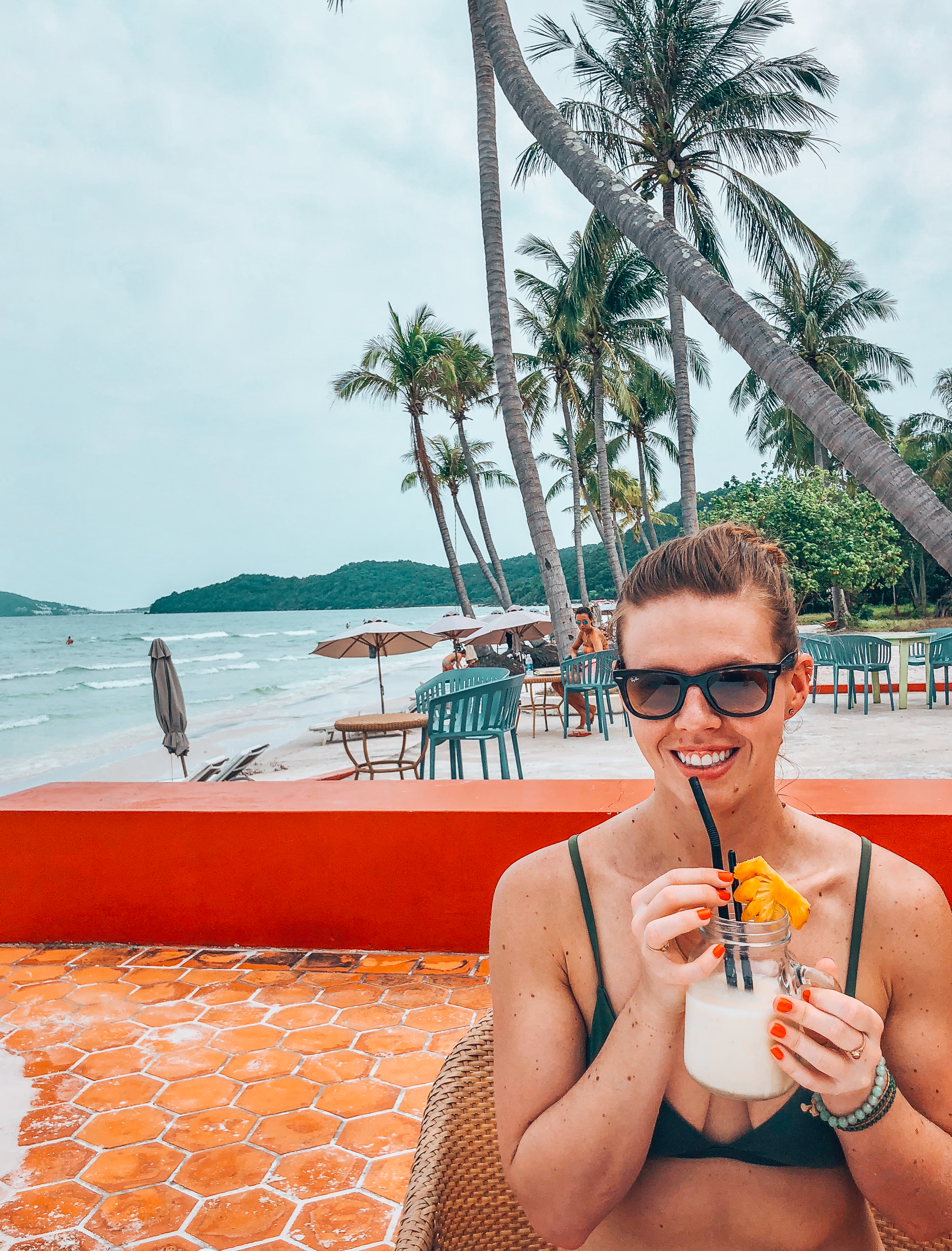
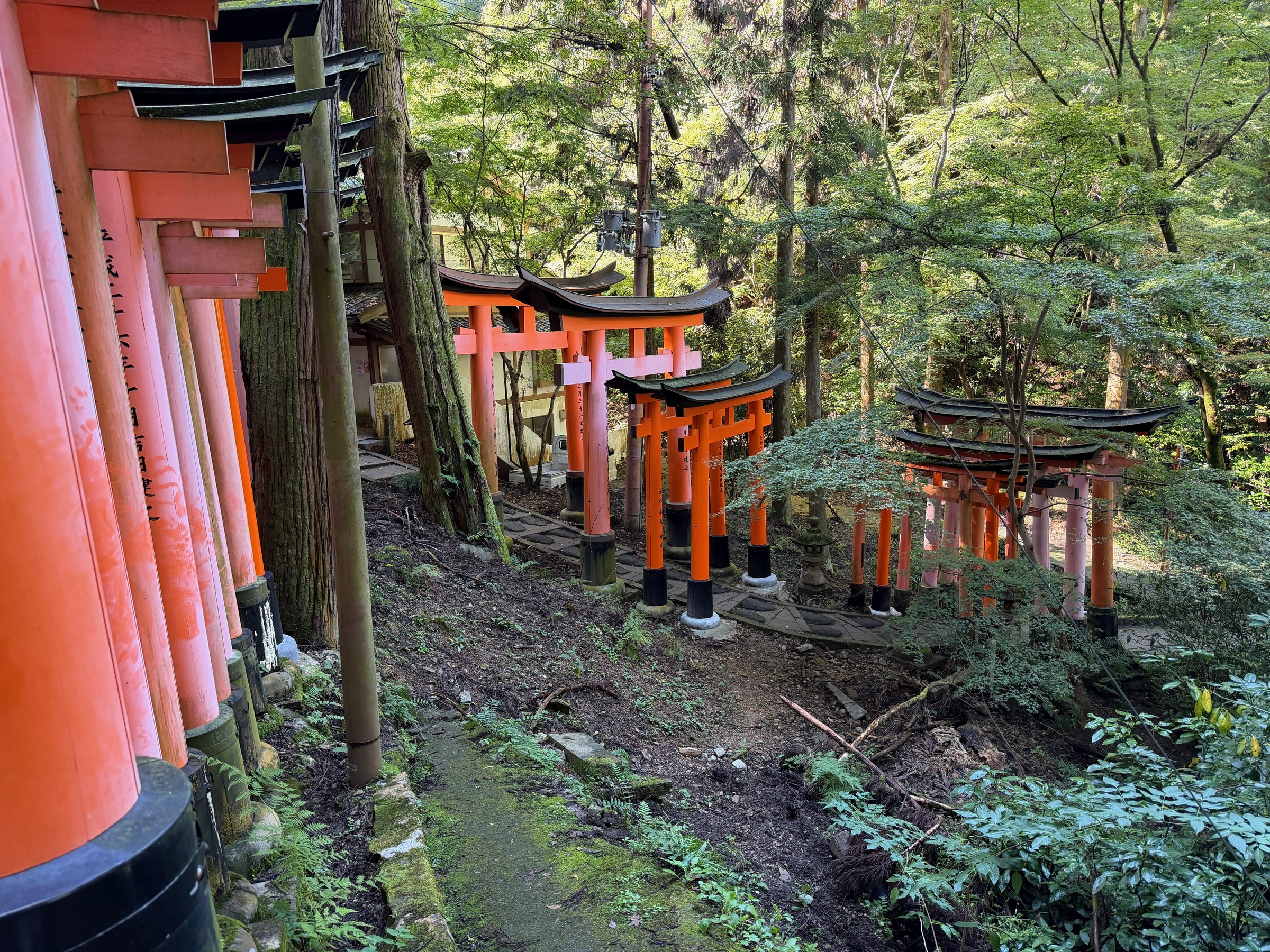
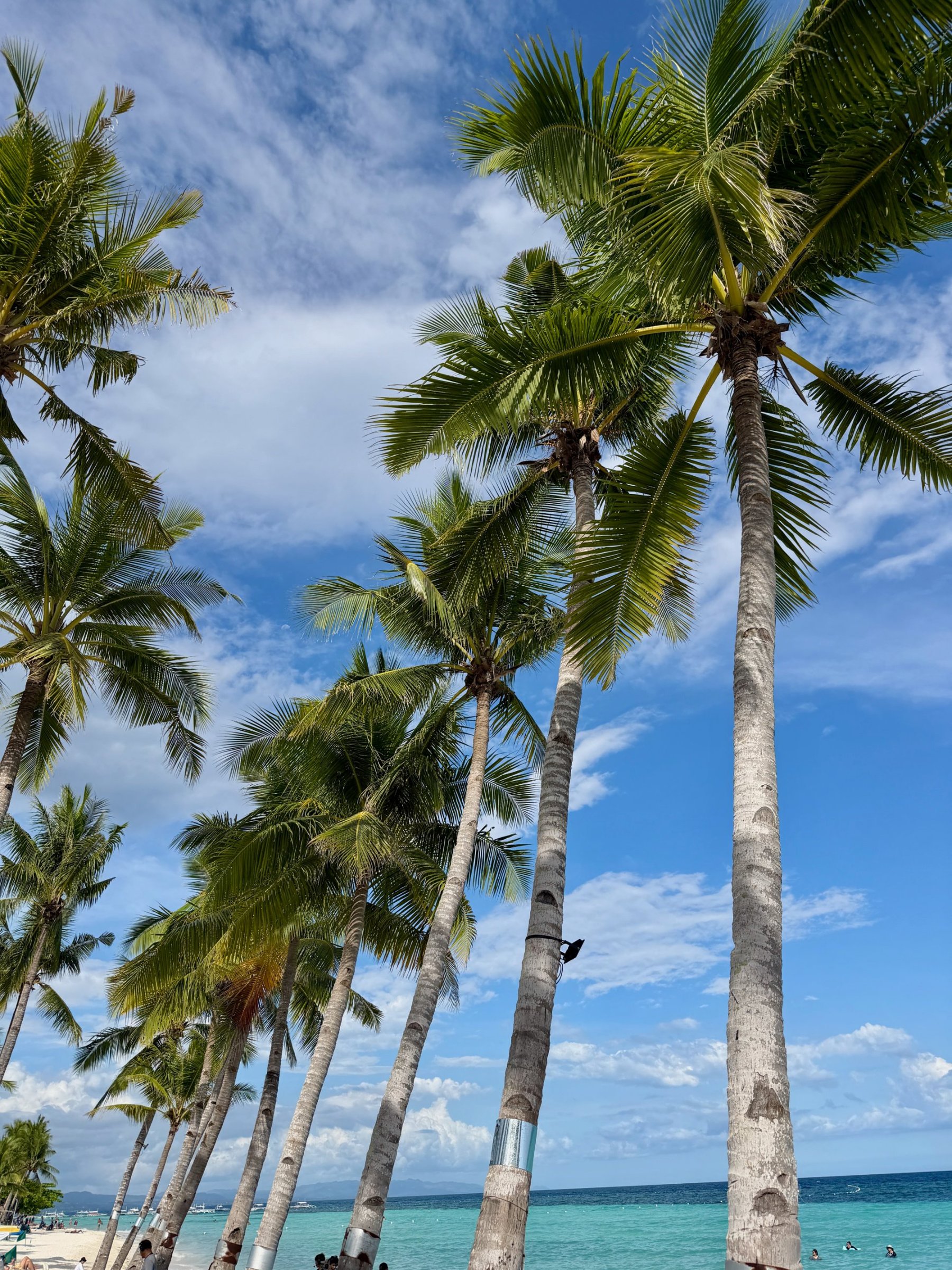
If you’re planning your next escape, here are a few more trips I’ve taken from Seoul: a long weekend in Kyoto, a tropical weekend in Bohol, and Ishigaki and Taketomi in Okinawa.
Leave a Reply