
One of the best things about living in Seoul is how close you are to real tropical water. Next up in my tropical-weekends-from-Seoul series: Ishigaki, the main island of Japan’s Yaeyama Islands, and its tiny neighbor Taketomi. Ishigaki sits much closer to Taiwan than to Tokyo, and it feels like it: coral reefs, turquoise bays, red-tiled roofs and Orion beer everywhere. We flew down for a long weekend in the middle of July and came home with sunburns, a lot of food photos and zero regrets.
The best part? Jin Air flies direct from Incheon in about three hours, so you can leave Seoul in the morning and be eating lunch by the beach before 1 pm.

Friday: reef views, a pink beach café and Ishigaki beef
If you can, grab a window seat. The approach into Ishigaki takes you right over the reef, and the water goes from deep navy to every shade of turquoise in a few seconds. Half the plane had their phones pressed to the glass, me included.
We picked up our rental car near the airport. Japan drives on the left, and you’ll need an International Driving Permit along with your licence, so sort that out before you fly. Honestly, a car is the only realistic way to see Ishigaki in a weekend.
First stop was lunch at Re:Hellow Beach in Maezato, a bright pink clapboard café surrounded by palm trees, about 20 minutes from the airport. We sat out on the deck and ordered a loaded plate with a fried egg, a hamburg patty, avocado and crispy onions, plus garlic shrimp with salad. Exactly the “we’re on vacation now” lunch we needed.

Then we drove across to the west coast and checked in at VIVOVIVA Ishigakijima, a resort on the water in Arakawa, near Fusaki. It’s about 15 minutes’ drive from town, which is the perfect distance: quiet at night, but easy to pop into the city for dinner. We paid USD 928.56 for three nights, taxes and fees included (about USD 310 a night). We spent the rest of the afternoon on a quiet stretch of sand just up the coast, with barely anyone else around.
Dinner was our first taste of Ishigaki-gyu, the island’s own wagyu, at Meat Bar Butcher Trico downtown. Steak sliced and served sizzling on cast-iron plates with peppers and fries, a big salad with a soft egg, and ice-cold Orion beers. If you only splurge on one meal here, make it Ishigaki beef.

Saturday: Kabira Bay, a sea turtle and a drive to the top of the island
Saturday was our big road-trip day, and it started with the best breakfast of the trip at Sunny cafe + Stay, just a few minutes’ drive from our hotel. It’s a white wooden house with a covered terrace looking straight out at the water. We had a smoothie bowl piled with berries, granola and coconut, banana French toast, and lattes in the prettiest blue-and-white pottery cups. Note that it’s only open 10 am to 3 pm.

Kabira Bay
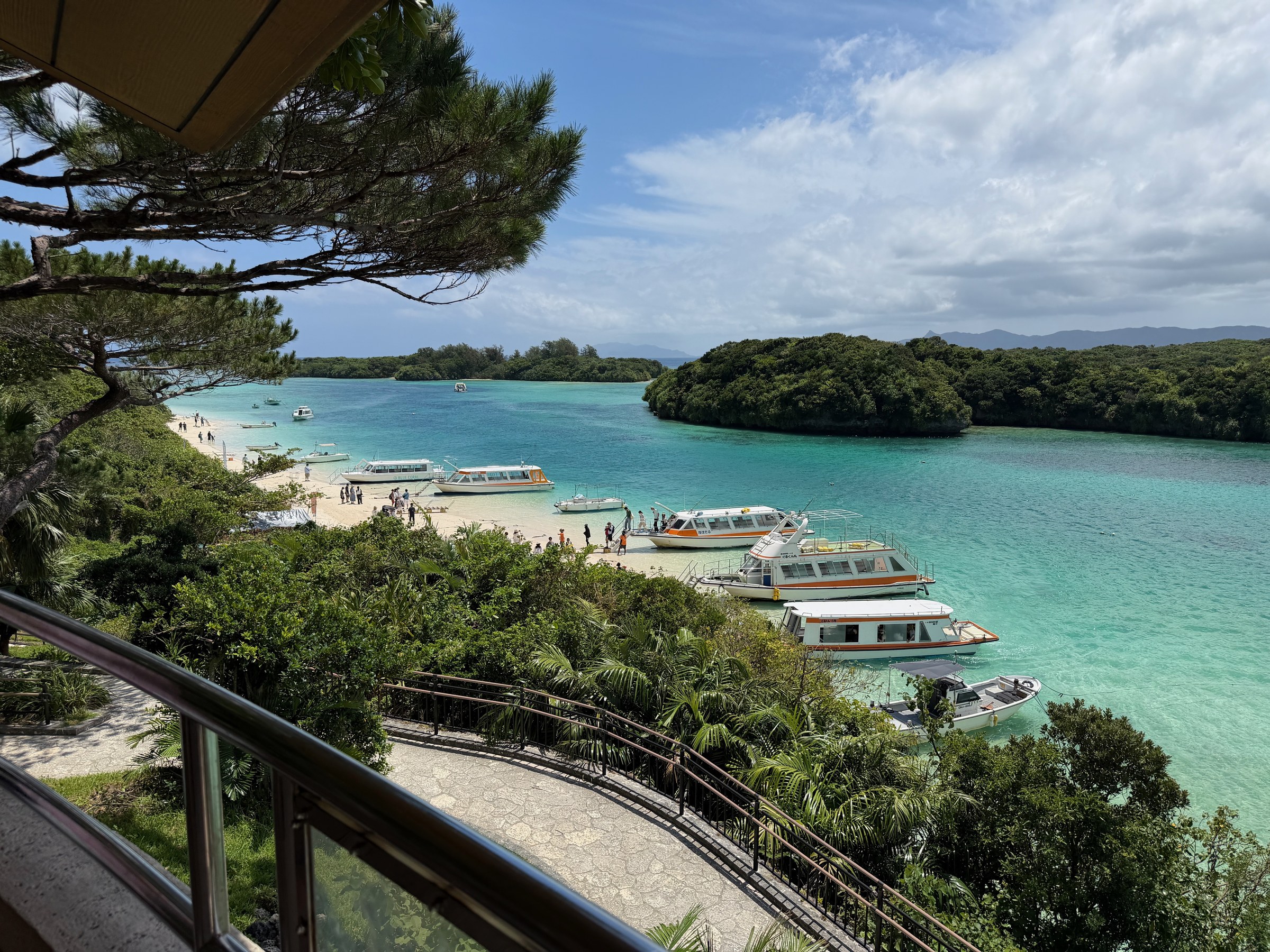
From there it’s about a 20-minute drive up the west coast to Kabira Bay, the postcard view of Ishigaki. Walk up to the viewpoint in Kabira Park and you’ll see why: white sand, little green islands and water that doesn’t look real. It was busy (it’s the island’s top sight for a reason), but there’s room for everyone at the railing.

One thing to know: you can’t swim in Kabira Bay. Strong currents and constant boat traffic mean swimming is prohibited. The way to see what’s under the surface is a glass-bottom boat. We went with Blue Coral, and the ride was about half an hour over coral gardens and fish. Then, right below the glass, a sea turtle cruised past. I may have squealed. Expect to pay around ¥1,700 per adult.

Afterwards we walked the beach around the bay, where the limestone rocks hang right over the sand. It’s a great spot for photos even if you can’t get in the water.

A few small things around the bay we loved:
- Fish sandals. The souvenir shops sell flip-flops shaped like fish (お魚サンダル). Ridiculous. I wanted every color.
- Onigiri. A little stand near the parking lot sells rice balls with fillings like Ishigaki wagyu sukiyaki and shikuwasa salmon. Perfect snack while you walk.
- Black pearls. Kabira Bay is famous for black pearl farming, and Ryukyu Pearl has a shop right by the bay if you want to browse (or treat yourself).
For lunch we had taco rice at Kabira Gohan-ya, a tiny mint-green spot near the bay. Taco rice is Okinawa’s Tex-Mex mash-up of seasoned mince, lettuce, cheese and salsa over rice, and it’s comfort food at its best. Then a quick look at Sukuji Beach just west of Kabira, a long, shallow, calm beach that’s much better for an actual swim.
Up to the northern tip
After lunch we drove northeast towards the Hirakubo peninsula, the skinny finger at the top of the island. It’s about an hour from town, the roads get quiet, and the views keep getting better.
On the way, we stopped at Ishigaki Market in Ibaruma, a breezy café with a sea view, for a mountain of mango shaved ice. Their speciality is “ito pinsu”, thread-like shaved ice that melts in your mouth. Pinsu is literally the Japanese spelling of bingsu, so we flew three hours from Seoul and still ended up eating bingsu. No complaints. It’s closed on Mondays.

At the very top of the island is Hirakubozaki Lighthouse. Walk up from the parking area for a view over the reef and a long, curving sandy beach below. This was one of my favorite views of the whole trip, and far less crowded than Kabira.

On the drive back we caught the golden hour at Tamatorizaki Observatory, a short walk up through red hibiscus to a lookout with views of both sides of the island. Free parking, no entry fee, and absolutely worth the stop.
Back in town, dinner was the one miss of the trip. We had Yaeyama soba (the local noodle soup, with thick, round noodles in a light pork broth), stuffed green peppers and a plate of local sashimi at a small izakaya downtown that I wouldn’t recommend, so I’ll spare you the name. The night got much better at Ishigaki Island Village, a building in Misakichō packed with tiny izakaya and bars. We ended up at Happy’s, an oyster and island-food spot hung with red lanterns, drinking Orion and highballs until late. Honestly, it’s just one of many: wander through and pick whichever one has the best vibe.

Sunday: a day trip to Taketomi by bike
If Ishigaki is the main event, Taketomi is the dreamy side quest. It’s a tiny, flat island just 10–15 minutes by ferry from Ishigaki, with a traditional Ryukyu village of coral-stone walls, red-tiled roofs and white sand lanes. And the best way to get around is by bike.
We fueled up near the port with pork tamago onigiri from Tamaya (玉や), the Okinawan classic of Spam and egg wrapped in rice and nori. Then, because it was vacation, donuts from Fluffy Donut a couple of minutes from the terminal.

Getting to Taketomi
Ferries leave from the Ishigaki Port Outlying Island Terminal roughly every hour, run by two companies, Yaeyama Kanko Ferry and Anei Kanko. As of October 2026, it’s ¥970 one way or ¥1,880 return for adults, and the crossing takes 10–15 minutes. You’ll also see machines in both terminals for Taketomi’s ¥300 island entrance fee. It’s voluntary, but it goes towards protecting the island, so please pay it.
We rented bikes from Minemoto Rental Cycle, a couple of minutes’ walk from the Taketomi ferry pier. They have regular and electric bikes, and the electric ones are worth it in the July heat. A day on a bike is the way to do it: the island is small, and riding down sandy lanes between coral walls covered in bougainvillea is pure joy.

Kaiji Beach and Kondoi Beach
Our first stop was Kaiji Beach, also known as Star Sand Beach. Press your palm into the sand and look closely: some of the grains are tiny star-shaped shells. It’s also the shadiest beach on the island, with trees leaning right over the sand. Swimming isn’t allowed here, so it’s more of a wander-and-look stop.

For swimming, ride a few minutes north to Kondoi Beach. This was my favorite beach of the whole trip. The water is shallow, warm and impossibly clear, and at low tide a sandbar appears that you can wade out to. There are showers and toilets, but not much shade, so bring sunscreen, water and a hat. Check the tide times before you go if you want the sandbar.


We biked back through the village for soft serve at Tammy, a tiny ice cream and shaved-ice shop (closed on Mondays), returned the bikes and caught the ferry back to Ishigaki in the mid-afternoon.
Back on Ishigaki we watched the sun go down from the hotel pool, then headed into town for burgers at Heart Land: towering burgers stacked with pineapple and purple slaw, potato wedges and big frosty beers. We finished with a Blue Seal soft serve, Okinawa’s classic ice cream brand. Two ice creams in one day is allowed on vacation.

Monday: one last brunch and home
Our flight home wasn’t until early afternoon, so we squeezed in brunch at Will Keli Cafe in Maezato, conveniently on the way to the airport: a flaky croissant sandwich stuffed with ham and cheese, a little salad, yogurt, a latte and fresh orange juice.

One last tip: stop at a FamilyMart before the airport and grab a few pairs of their striped “Line Socks”. They’re a cult convenience-store souvenir in Japan, and they make great little gifts for friends back in Seoul.
The drive to the airport takes about 25 minutes from town, and the airport is small and easy, so you don’t need to show up hours early.
The not-so-great bits
Ishigaki was close to perfect, but a few things are worth knowing before you go:
- You really need a car. Buses exist, but they’re infrequent, especially up north. Book a rental early for summer weekends, and don’t forget your International Driving Permit.
- You can’t swim at Kabira Bay. It’s the most famous view on the island, but it’s for looking and boat rides only. Plan your swims for Sukuji Beach or Kondoi Beach on Taketomi.
- The north is far. Hirakubozaki is about an hour from town each way. Give the northern loop most of a day rather than trying to squeeze it in.
- July is hot, and it’s typhoon season. We had blue skies the whole time, but summer and early autumn are typhoon season in Okinawa, so keep an eye on the forecast and get travel insurance. Bring a hat and reef-safe sunscreen, and drink more water than you think you need.
- Cafés close early. A lot of the best cafés shut by mid-afternoon or close one day a week, so check hours before you drive out.
Would I go back to Ishigaki?
In a heartbeat. For a long weekend from Seoul, it’s hard to beat: one direct flight, no jet lag, and you land somewhere that feels completely different, with coral reefs, slow island time and incredible food. Taketomi alone is worth the trip. And there are plenty more Yaeyama islands just a ferry ride away for next time.
How I’d plan a long weekend in Ishigaki
- Day 1: Land, pick up the car, beach café lunch, check in, Ishigaki beef dinner in town.
- Day 2: Kabira Bay and a glass-bottom boat in the morning, then drive the northern loop: Hirakubozaki and Tamatorizaki.
- Day 3: Taketomi by ferry and bike, with Kondoi Beach timed for low tide.
- Day 4: Slow brunch on the way to the airport.
Where we stayed, ate and drank
- VIVOVIVA Ishigakijima, Arakawa: our hotel, USD 928.56 for three nights including taxes and fees
- Re:Hellow Beach, Maezato: pink beach café, great first lunch
- Meat Bar Butcher Trico, downtown: Ishigaki beef steak
- Sunny cafe + Stay, Arakawa: breakfast on a sea-view terrace
- Blue Coral, Kabira: glass-bottom boat
- Kabira Gohan-ya, Kabira: taco rice
- Ryukyu Pearl, Kabira: black pearls
- Ishigaki Market, Ibaruma: mango shaved ice with a sea view
- Ishigaki Island Village, downtown: a building full of tiny izakaya; we liked Happy’s
- Tamaya (玉や), near the port: pork tamago onigiri
- Fluffy Donut, near the port: donuts
- Minemoto Rental Cycle, Taketomi: bikes, right by the pier
- Tammy, Taketomi village: soft serve and shaved ice
- Heart Land, downtown: burgers and beer
- Will Keli Cafe, Maezato: brunch on the way to the airport

Leave a Reply